

PLATFORM · PHYSICAL AI LAYER
The Physical AI Layer turns fleet data into decisions — assigning the right robot to the right job, catching problems before they cost you, and giving your team a plain-language way to ask what’s happening and act on it.
What happens when operations run on agents
ALARM REDUCTION
ANNUAL OPERATIONAL SAVINGS DELIVERED
ALARMS AUTO-RESOLVE
*Aggregated across our global portfolio of Tier 1 semiconductor and hardware OEMs.
WHAT IT IS — AND ISN’T
The Physical AI Layer isn’t a robot’s brain, and it was never meant to be one.
Every robot in your fleet keeps its own navigation, perception, and control — built by its manufacturer, running exactly as designed. Formant will never direct joint axes, handle obstacle avoidance, or run inference on-device. What the Physical AI Layer governs sits one level up: which robot does which job, when, and what happens the moment something looks wrong — across every vendor in your fleet, not just one.
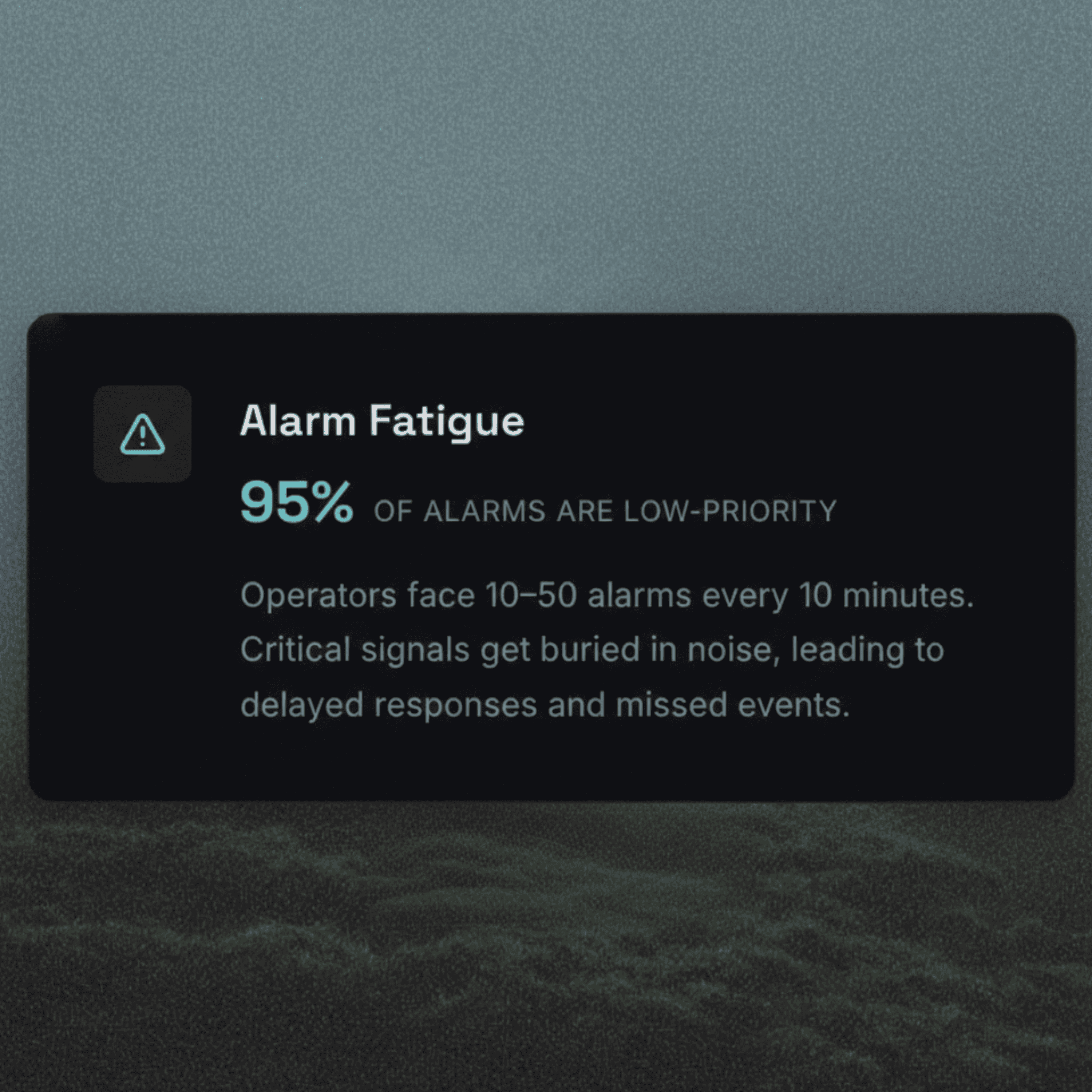
Conversational Fleet Control
Ask what’s happening and act on it in plain language — “Why is Line 4 backed up?” or “Re-assign 3 AMRs to Dock B” — instead of navigating a dense dashboard or writing a script.
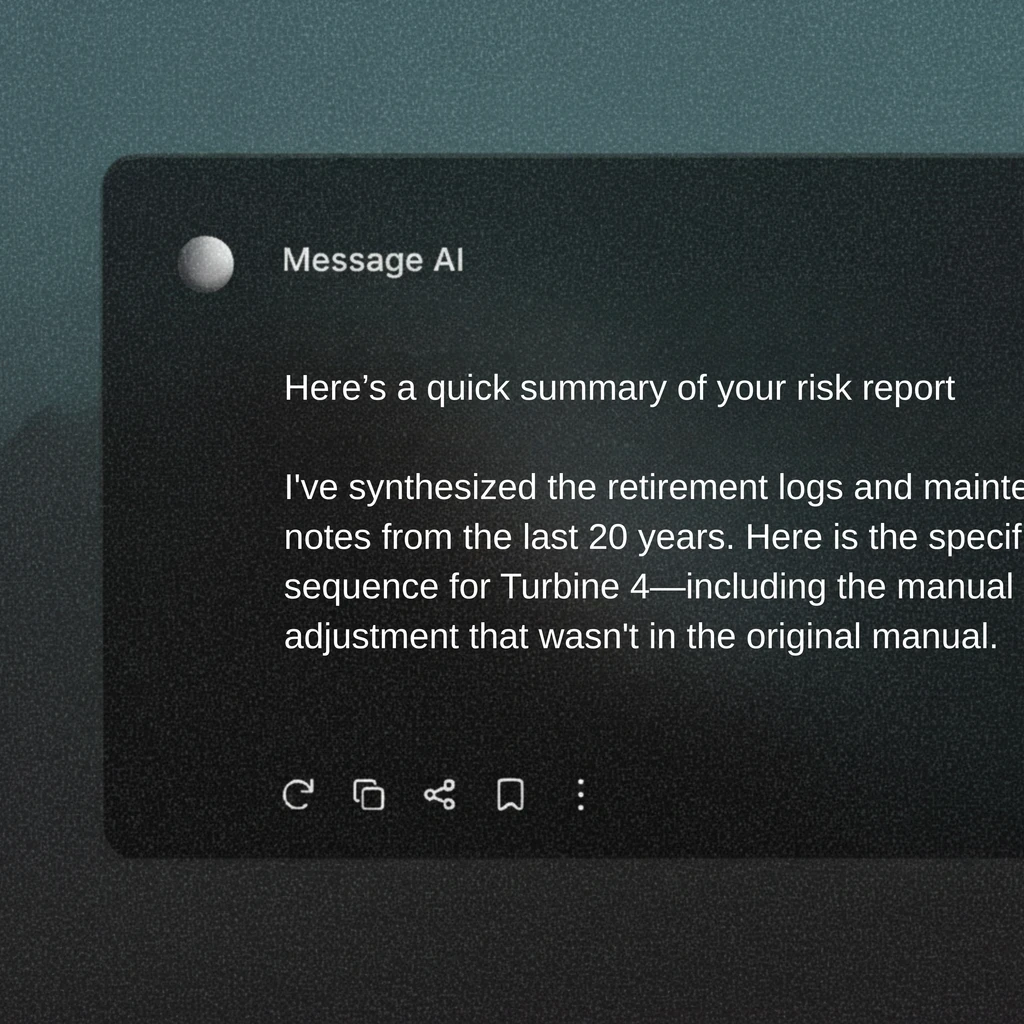
ML as the High-Level Strategist
Reasoning engines track historical performance per robot, per mission alongside real-time location, battery, and task queue. The Physical AI Layer assigns the best-suited robot — or robots — to each job.
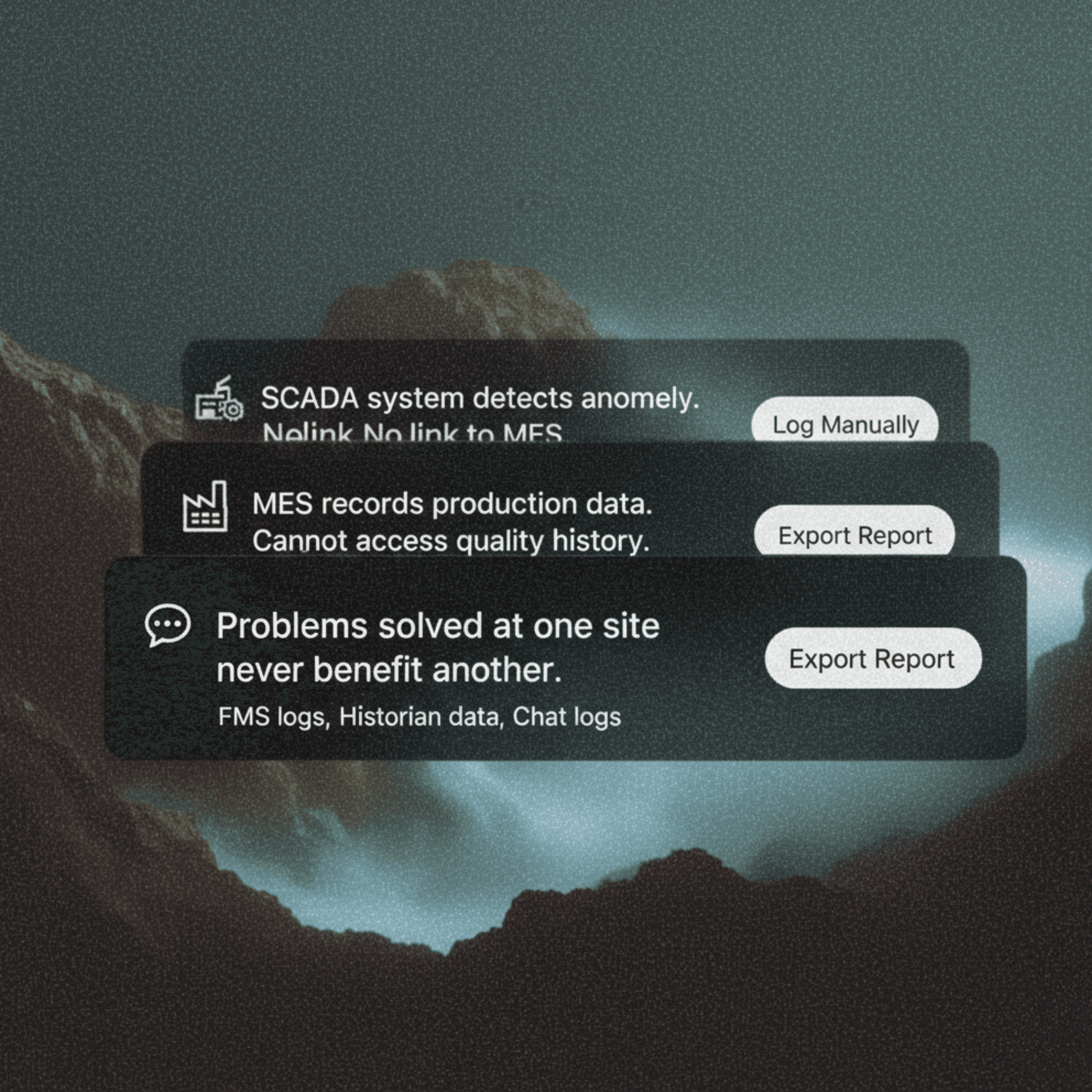
Context-Aware Problem Solving
When telemetry shows something outside normal range, the Physical AI Layer flags it and dispatches a robot — or a person — to investigate. Fused with your SOPs, incidents get triaged automatically.
HOW IT WORKS
Behind the conversation, reasoning engines track historical performance per robot, per mission — speed, error rates, how a given unit has handled a given job before — alongside real-time location, battery, and task queue.

Conversational Fleet Control
Ask what’s happening and act on it in plain language — “Why is Line 4 backed up?” or “Re-assign 3 AMRs to Dock B” — instead of navigating a dense dashboard or writing a script.
ML as the High-Level Strategist
From historical performance data and real-time signals, the Physical AI Layer assigns the best-suited robot — or robots — to each job, coordinating multiple units on a single mission when the work calls for it.
Context-Aware Problem Solving
When telemetry shows something outside normal range, the Physical AI Layer flags it and dispatches a robot — or a person — to investigate. Fused with SOPs and maintenance logs, incidents get triaged automatically.
See It in Practice
Ten robots working a site, tasks flowing in all day. The Physical AI Layer decides who does what and when — each robot still plans its own path and handles its own obstacles once it has the assignment.
SEE IT IN ACTION
Watch the Physical AI Layer in Action
BUILT FOR YOUR FLEET
Because the Physical AI Layer never reaches into any robot’s onboard control stack, it doesn’t need privileged access to any manufacturer’s proprietary systems. Run the same conversational command and task governance across a fleet built from four different vendors — not just one.
Who Handles What
The Physical AI Layer draws on which unit has handled this zone reliably before — not just which one is nearest — to make smarter, history-aware assignments across your entire fleet.
Historical performance per robot, per mission
Zone-level reliability tracking across your fleet
Smart re-assignments when conditions change
Real-Time Availability
Which robot is closest and available right now — drawing on live location, battery level, and current task queue to make every dispatch count without wasted movement.
Live location, battery, and task queue awareness
No wasted dispatches on unavailable units
Continuous re-evaluation as conditions shift
Coordinated Execution
Whether the job needs one robot or several working together, the Physical AI Layer coordinates multi-unit missions while each robot still handles its own navigation and obstacles.
Multi-robot mission coordination
Each robot keeps its own onboard control stack
Works across every vendor in your fleet
VALUE DELIVERED
Traditional pricing models charge you for user seats, keeping your data siloed. We price for real-world results. Our generative AI orchestrates actions across your workflows, turning unmanageable hardware signals into verified outcomes. Use the calculator below to see the immediate economic upside Formant returns to your physical operations.

See how a chat-first, ML-driven Physical AI Layer turns a mixed-vendor deployment into a single, self-optimizing operation.